Niki Albums
 |
 |
 |
 |
Born and raised in Jakarta, Indonesia, NIKI re-located all the way to Los Angeles and has since built up a loyal and ever-growing fan base. It goes without saying that Jakarta and Los Angeles are two major cities – with different cultures, different music scenes and different mindsets. Having re-located from another country myself, I was wondering what she found to be the biggest difference in the creative industries.“I think it’s really important to note that I spent my childhood and formative years in Jakarta, so I feel like the lens in which I viewed and perceived Jakarta as completely different to how I perceive LA as an adult, I guess”, she reflects. “But basically I think I would say there’s sort of a more larger appreciation for the arts and creativity in LA. Almost everyone walking down the street is probably creative in some way and I think like coming here, being immersed in sort of like a very creative community was really inspiring in a different way and also just energizing. Back home, I would say everybody is very musical if that makes sense. Everyone I knew back home loved to sing or just loved music. But more in a business-y than creative way.”
“Something that I uncovered about myself through revisiting all of these old songs, how majorly influenced I was by my English literature class” – NIKI
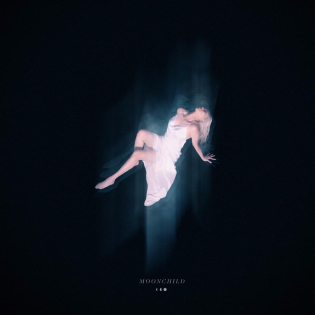
We definitely agree to the fact that Los Angeles is a city filled with entrepreneurs and budding creatives, and it’s interesting to hear how Jakarta has a different approach. “Pre-pandemic, I tried to go twice a year”, she says when I ask her if she visits home regularly. “I would go whenever my little brother was on break, whenever his school was out. So that would be like the summer or Christmas. And then obviously the pandemic happened, so I didn’t get to see them, but I was just recently there for a week.” Speaking of the pandemic (I know, nobody can even hear that word anymore), NIKI has recorded her sophomore studio throughout those countless and never-ending lockdowns. Although it has been a rough time for many artists, the songstress didn’t let it impact her work flow in the slightest. “I technically started recording in November”, she tells me. “The first time I thought about recording it was the beginning of the pandemic. So I guess that’s why I didn’t really record it until later. Most of this album was produced in my producers house, mostly in his living room. It was really fun, I would say. And then all the other songs that were not recorded at this house at his house were recorded also at a house”, she laughs and confesses how grateful she is that most of her producers and friends in the industry own a home studio, which make recording processes much easier. “It’s like operating a small business out of your home. All your friends, or their friends, or somebody you meet at the bar probably has like a studio at home or in their garage, most likely”, she chuckles, and highlights the fact that this is just one of the benefits of living in the city of angels. The majority of songs on ‘Nicole’ are tracks that NIKI wrote when she was younger, and for the album, she reimagined them to reflect her experiences over the past few years. The album’s first half is actually comprised of new or never-before-heard songs and its latter half is featuring her favourite tracks from her popular YouTube channel – and each song is entirely written by herself. But before we get into the themes on the album, I was wondering how she would say her songwriting skills have evolved, and whether she now approaches anything differently than in the past, and it turns out English Literature classes play a major role in it! “I was having a laugh about it with my producers and my friends. I think something that I uncovered or discovered about myself throughout revisiting all of these old songs, is just like how majorly influenced I was by my English literature class”, NIKI laughs. “We were reading a lot of like these dense lit literary books and we were studying poetry. So back then, I think I had this approach where it was just like airing on the side of pretentious perhaps. Because I was writing in the voice of like Edith Wharton. There are all of these big words that I now as a 23 year old, chuck out fondly. I would never write those words into a song now. It was just funny. So back then I would say I was a lot heavier with metaphors just laid in poetry.” As someone who studied English Literature for two terms at University as well, I can relate to that statement more than anything – incorporating metaphors and big poetry words that I didn’t even know the meaning of into any piece of writing is certainly something I used to do as well. Now, NIKI has changed it up. “Now I’m very blunt and just kind of say things as they are, which I think in a way is poetic in itself. As an adult, I don’t write the same kind of like fluffy language but I still have an affinity for it and that’s why I made a whole record about it. It’s just cute. It’s like the dichotomy between my adult self and my younger self, and they’re married into the same project.”
| |
|
| |
|